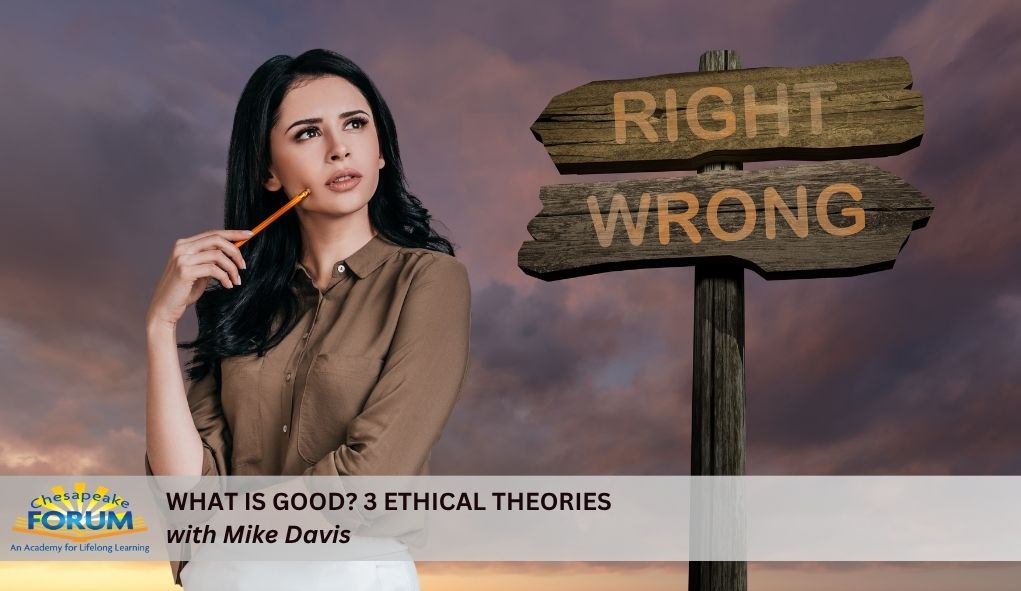
Explore three major ethical theories and learn how they can sharpen your thinking about what’s right and wrong.
This class is dedicated to the late Forest Hansen. An outstanding philosophy teacher, he enriched our community for many years with his courses in philosophy and ancient Greek culture and literature. We will follow Forest’s methods: avoid religion and politics; no judgement on participants’ comments; and participation by attendees is necessary to encourage learning.
Ethics is one of philosophy’s cornerstone areas, alongside the theory of knowledge and the nature of existence. From Plato and Aristotle to the present day, ethics is both fascinating and controversial, and has branched into sub-specialties such as medical, professional, and legal ethics.
This course examines three influential Western ethical theories: cultural relativism, utilitarianism, and Kantianism. Cultural relativism is a theory that denies objective theories are possible, and we’ll explore why many people find it appealing. Utilitarianism defines good as whatever produces the best outcome for the most people—a results‑oriented view. Kantianism focuses on duty and following universal ethical principles regardless of consequences.
What to expect:
Each class session will start with a brief, 10-minute lecture on the basics of the ethical theory followed by approximately 80 minutes of discussion. You’ll compare the strengths and limitations of each approach and consider how they apply to real‑world moral questions.
We will use The Elements of Moral Philosophy by James Rachels as the book for this course. Although out of print, it’s readily available from used booksellers online. You’re also encouraged to use AI to research the theories further.
None of these theories resolves every ethical issue, but together they offer a useful framework for thinking through moral questions and making personal decisions. This course aims to strengthen your ability to reason about what is right and wrong—and to help you avoid the ethical “rabbit holes” where overthinking can lead to decision paralysis.
3 Wednesdays | Oct 21, 28, Nov 4 | 10:30 – noon | ZOOM | $50